


1 min read
The Two Roles of a Facilitator Guide
 Pat Michaels : May 21, 2026
A well-designed facilitator guide does more than organize content. It supports instructors before the session begins and enables them to deliver a...
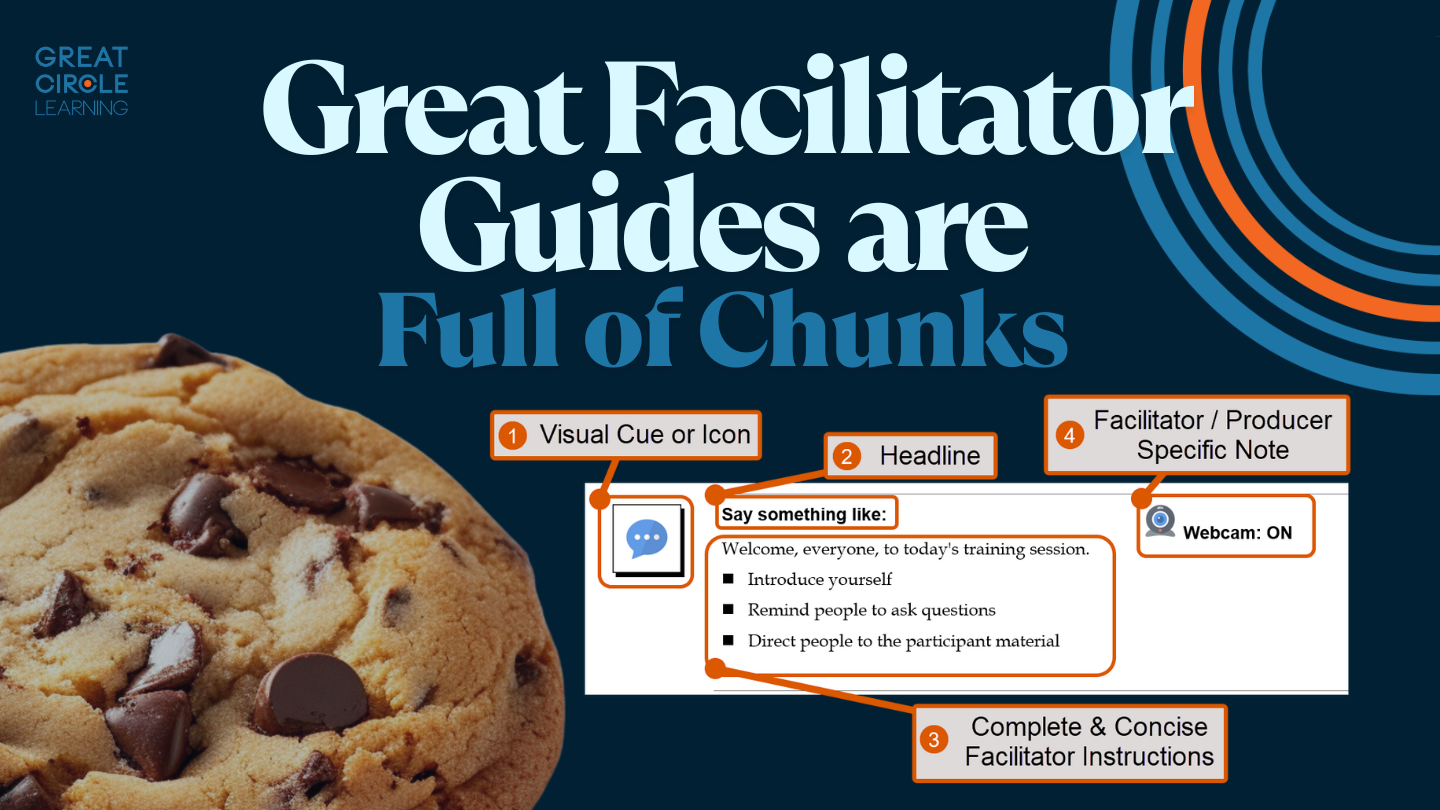
The best facilitator guide instructions are like chocolate chip cookies: full of chunks.
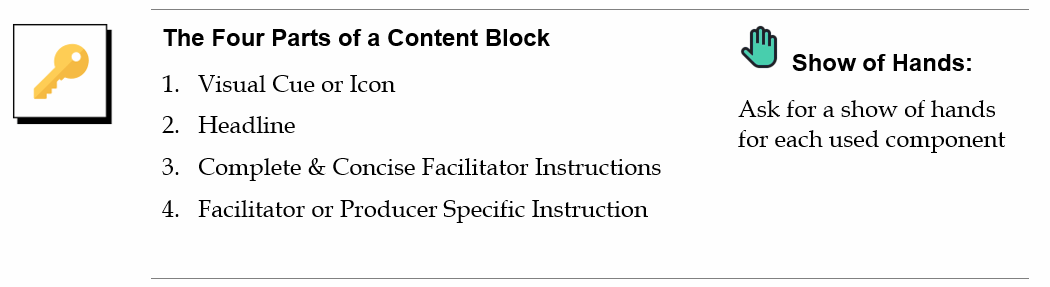
To create a facilitator guide that functions as an at-a-glance delivery aid, we need to “chunk” our learning material into specific actions. Think of things like “say this” or “click to go to next slide.” Each chunk is always made up of three pieces and sometimes a fourth.
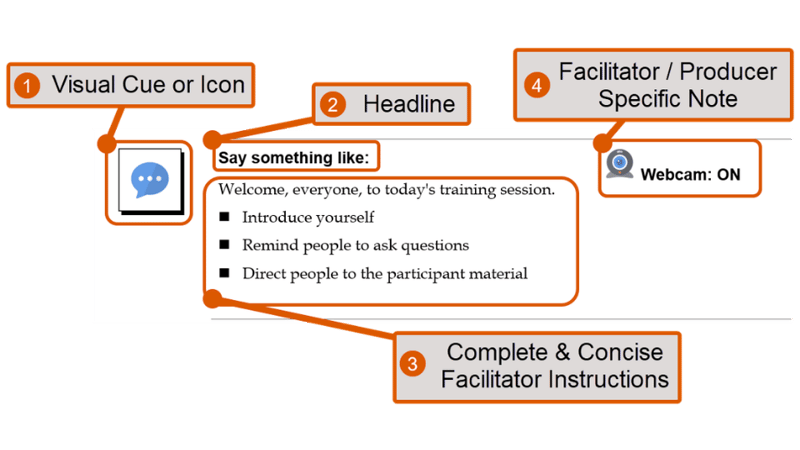
The headline section of the content block lets us quickly fine-tune the facilitator's instructions. With a quick glance, the facilitator sees the following instructions

It ends up being ambiguous, which leads to inconsistent training. One facilitator may do it one way while another does it differently. As we all know, inconsistent training leads to inconsistent results, and we don’t want that. By adding a Headline, at-a-glance, the facilitator knows not only that they are saying a specific thing, but they also know the manner in which they need to do so.
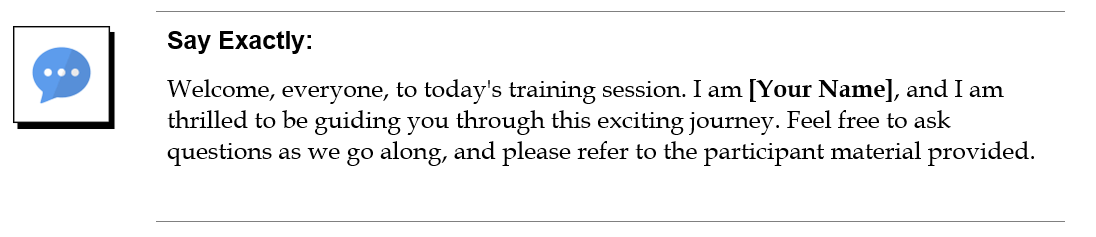
The third part of the content block is the actual facilitator instructions for the specific “chunk.” It could be talking points, an activity that is being run, or links to the video that needs to be played. Regardless of the type of instruction that is being led, the material needs to be complete and concise.
If we leave ambiguity in our instructions, we will get inconsistent results in the long run. The training that happens in Boston will be different than the one that occurs in Florida. Or there will be differences between the class run last week and the one run a month ago. Take this example: if we ask a question but don’t provide acceptable responses, portions of the training may be missed.

But by providing complete information, we can ensure all details are covered.
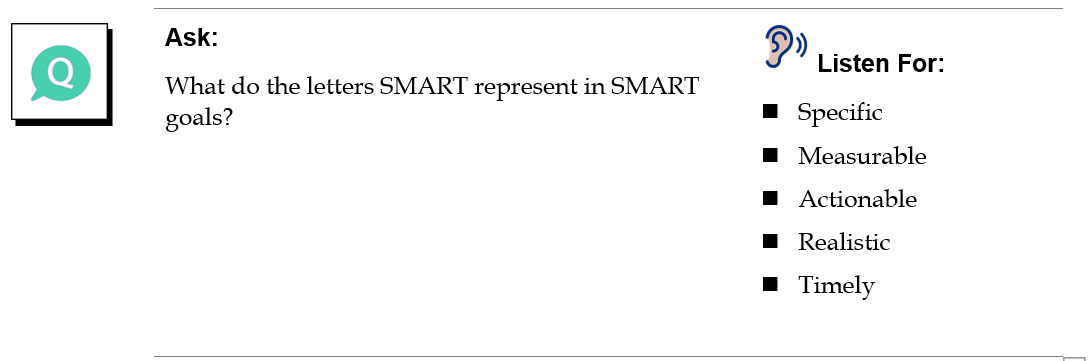
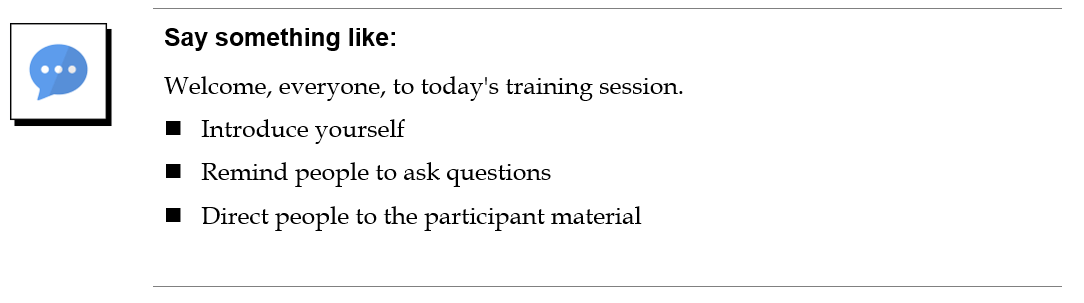
Remember that we want facilitator guides to be “at-a-glance.” To ensure it is possible, we want to make the information we provide as instructions as concise as possible. If we give the facilitators a lot of text, they will read the information to the class. They will be eyes in the book and not looking at the class or the camera. This is not a great experience for either the participants or the facilitators.
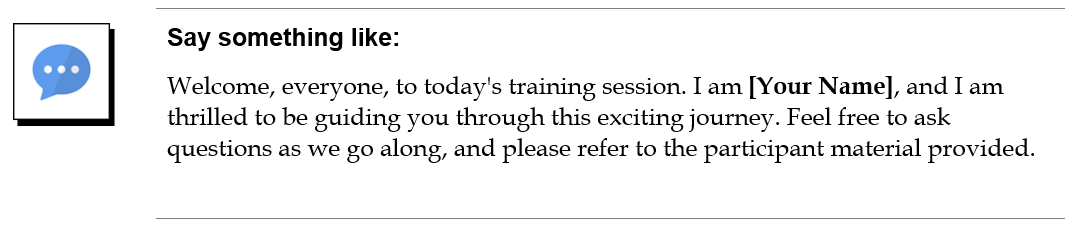
⭐One star – Would not recommend.
However, if we make the instructions as concise as possible, we can ensure the facilitator gets all the information required for that specific chunk in the easiest way to discern it.
When there are items that a facilitator or producer needs to do or pay attention to and they don’t need to bring it to the class’s attention, make use of the facilitator/producer specific notes. It can be simple instructions, such as asking the class to raise their hands.
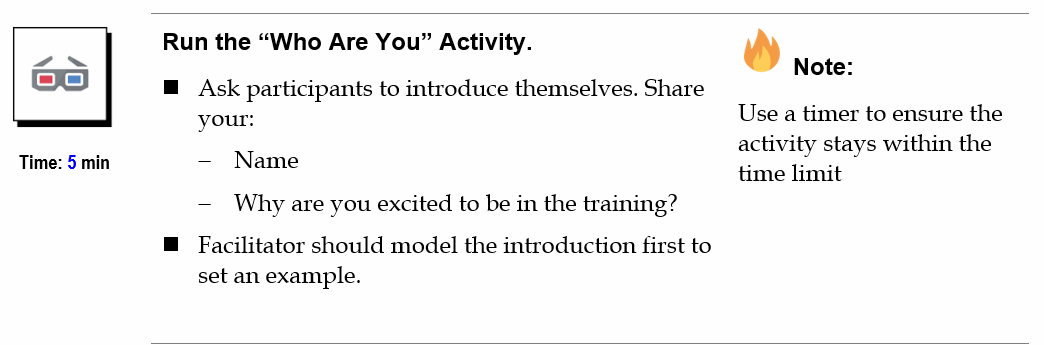
To instructions on to ensure the timing of the training stays on track.
Remember, one of the main goals of a facilitator guide is to drive consistency in your instructor-led or virtual ILT program. Give the instructions to make sure that it can happen.
1 min read
Pat Michaels : May 21, 2026
A well-designed facilitator guide does more than organize content. It supports instructors before the session begins and enables them to deliver a...

1 min read
Pat Michaels : April 1, 2026
The success of instructor-led training (ILT) hinges on the quality of its delivery. You can have well-designed content, strong learning objectives,...
1 min read
Pat Michaels : May 8, 2026
Instructor-led training isn’t going anywhere. But the expectations around how it’s designed and delivered have changed.